Titanic and the Presidents
My thanks to George Behe and Dan Curley for their encouragement and inspiration for this article.
Of the 45 men who have served as President of the United States as of this writing, many have had connections with people who were on the Titanic either through families, brief encounters and business transactions, or close friendships. This article doesn’t encompass all connections. I am still constantly finding more and will update this article as needed. But I believe this present version includes most of them.
Martin Van Buren
President Martin Van Buren nominated Peter V. Daniel as an Associate Justice to the United States Supreme Court. Peter V. Daniel had the unfortunate distinction of being one of those who voted against Dredd Scott in the now-famous case that prevented black people from becoming citizens before the Civil War. Peter V. Daniel was a great-grandfather of Titanic 1st class passenger and survivor Robert Daniel. Robert Daniel held office in the Virginia State Senate and is interred in the same mausoleum as Peter V. Daniel. The mausoleum happens to be near President James Monroe, President John Tyler, and Confederate President Jefferson Davis’s final resting places in the same cemetery.
Note: By coincidence, Carpathia passenger Rev. Father Roger Taney Anderson was a descendant and namesake of Chief Justice Roger Taney who was nominated by President Andrew Jackson. Taney served on the same court as Peter V. Daniel and both participated in the Dred Scott decision. Rev. Father Anderson led a service of thanksgiving for Titanic survivors being rescued on the Carpathia and also led the service when 4 Titanic victims were buried at sea.
James K. Polk
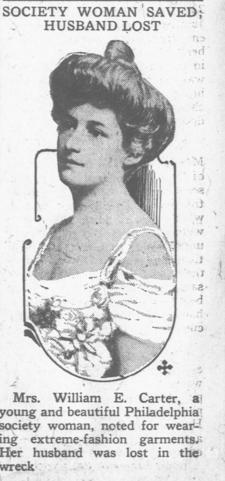
Lucile Carter
Credit: The Day Book April 19, 1912
1st class passenger and survivor Lucile Polk Carter is reportedly related to President James K. Polk and by proxy, so are her children William Carter II and Lucile (the younger).
Abraham Lincoln
The connections to Abraham Lincoln are more with his son, Robert Todd Lincoln. For President Lincoln, some history buffs like to point out that he was shot on April 14, 1865 and died on April 15, 1865. The Titanic struck an iceberg almost exactly 47 years later on April 14, 1912 and sank on April 15, 1912.
When the initial planning began for the Lincoln Memorial in Washington D.C., Titanic 1st class passenger and victim was one of the members of the committee. Francis D. Millet was prominent artist with many friends and connections in Washington DC. He also also friends with the sculptor that created the iconic statue of Lincoln, David Chester French.
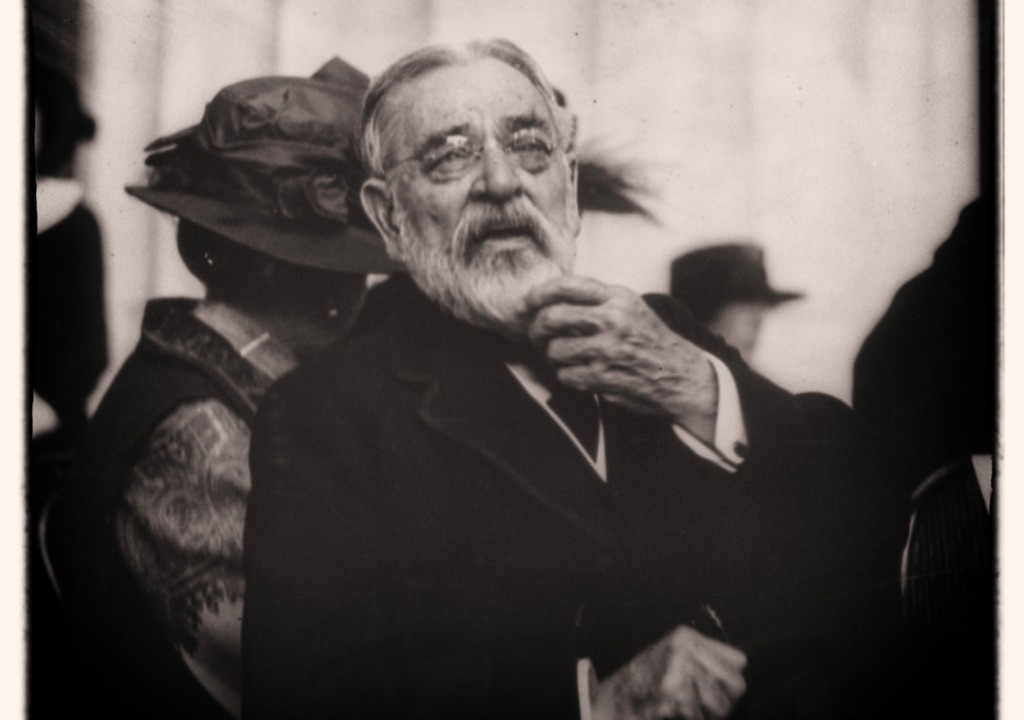
Robert Todd Lincoln at the opening of the Lincoln Memorial
Credit: Library of Congress
President Lincoln’s son Robert Todd Lincoln was the only one of his children to live to adulthood. Robert had a law practice in Chicago called Isham, Lincoln, & Beale and served in multiple government positions including two presidential cabinets. He also was at his father's deathbed, he was with James Garfield when he was shot, and was at the deathbed of William McKinley. Robert felt like there was some kind of curse with him. He is buried not far from Archibald Butt's cenotaph in Arlington Cemetery.
The law practice Robert Todd Lincoln was part of had multiple law partners including Arthur Ryerson, a future 1st class passenger and victim of the Titanic disaster. Mr. Ryerson did not stay with the company and later went on to become wealthy in the steel business.
Ann Isham
Credit: Encyclopedia-Titanica
Another partner was Edward Swift Isham, the father of Titanic 1st class passenger and victim Ann Isham. The Ishams were also related to the Lincolns as one of Ann’s relatives Charles married Robert’s oldest daughter Mamie.
James A. Garfield
President Garfield’s son Harry was a prominent lawyer and at one time, one of the members of his household staff was future Titanic 2nd class passenger and survivor Edwina Troutt.
Grover Cleveland
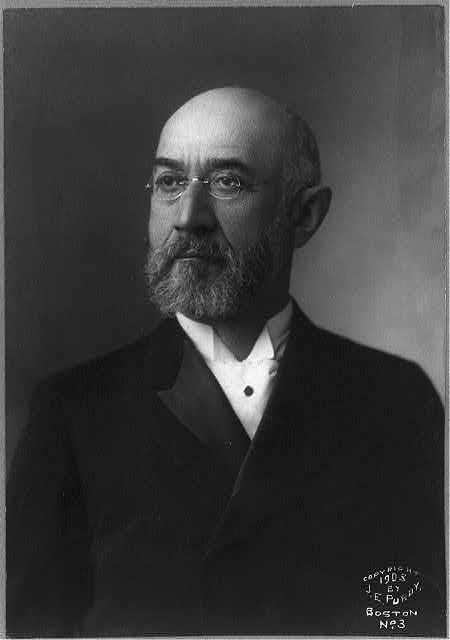
Isidor Straus at the time when he was serving in Congress.
Credit: Library of Congress
President Cleveland was one of two Democrats to serve as president from Lincoln to Wilson and is primarily known today as one of two presidents to serve two non-consecutive terms. Cleveland was from New York and served in different political positions over the years, gaining friends and influence before entering the White House for his two non-consecutive terms.
One of the friends President Cleveland made in New York was the co-founder of Macy’s Department Store and Abraham & Straus, Isidor Straus (who was later a 1st class passenger and victim of the Titanic disaster). Isidor and his brothers Oscar and Nathan were close to President Cleveland and were fellow members of the Democratic Party. Oscar was a diplomat under the Cleveland administration (and would serve as an ambassador under 4 consecutive administrations). In February 1893, Cleveland had Isidor come and visit the White House, where he offered Isidor the position of Postmaster General. Isidor considered the President’s offer, but ultimately declined because it would have meant him giving up or neglecting his businesses in New York. Had he accepted the position, Isidor would have become the first Jewish person on a presidential cabinet rather than Oscar several years later. In July of that year, a financial crisis began while Congress was out of session. Cleveland met with Isidor at the White House for 15 minutes before meeting with his cabinet and finally announced he was calling a special session of Congress. Though Isidor wasn’t sure whether his conversation with the president influenced his decision, a lot of people credited him with influencing the president’s decision which resulted in the crisis being resolved. In 1894, Straus was elected in a special election to Congress after the former Congressman from New York resigned. Straus ran on better fiscal responsibilities, opposed William McKinley’s policies, and opposed an income tax saying, “Such a tax puts a premium upon dishonesty and encourages honest men to commit perjury.” It happened to also be the same year Cleveland hoped to make Isidor his Minister to Holland. Isidor did not get the position due to being elected to Congress and Cleveland took the news in stride, saying that Isidor may help them more in Congress. Cleveland was right because Straus supported many of the things Cleveland was trying to accomplish during his year in the House of Representatives. While in Congress, Isidor devoted himself to what he knew best: finances. He analyzed bills and budgets while he was in Congress and voted for what he believed was best. He also was involved in a treaty with Russia and in tariffs on goods. Straus chose not to run again for Congress, however, and he was replaced by a Republican. Straus told the President that he was still glad he didn’t run because if he had run, he would have won. He did not enjoy his time in Congress and was happy to go back to being a businessman. Isidor was not the only one to make an impression of President Cleveland because on December 27, 1894, Cleveland sent an invitation to Isidor’s wife Ida to join him in receiving guests at the White House on New Year’s Day. He left office the following year for his Republican successor. Just because he was no longer a Congressman did not mean he ceased involvement in the government, however. He continued to advocate for things he believed in behind the scenes and he continued to correspond with President Cleveland as an unofficial advisor and personal friend.
Theodore Roosevelt
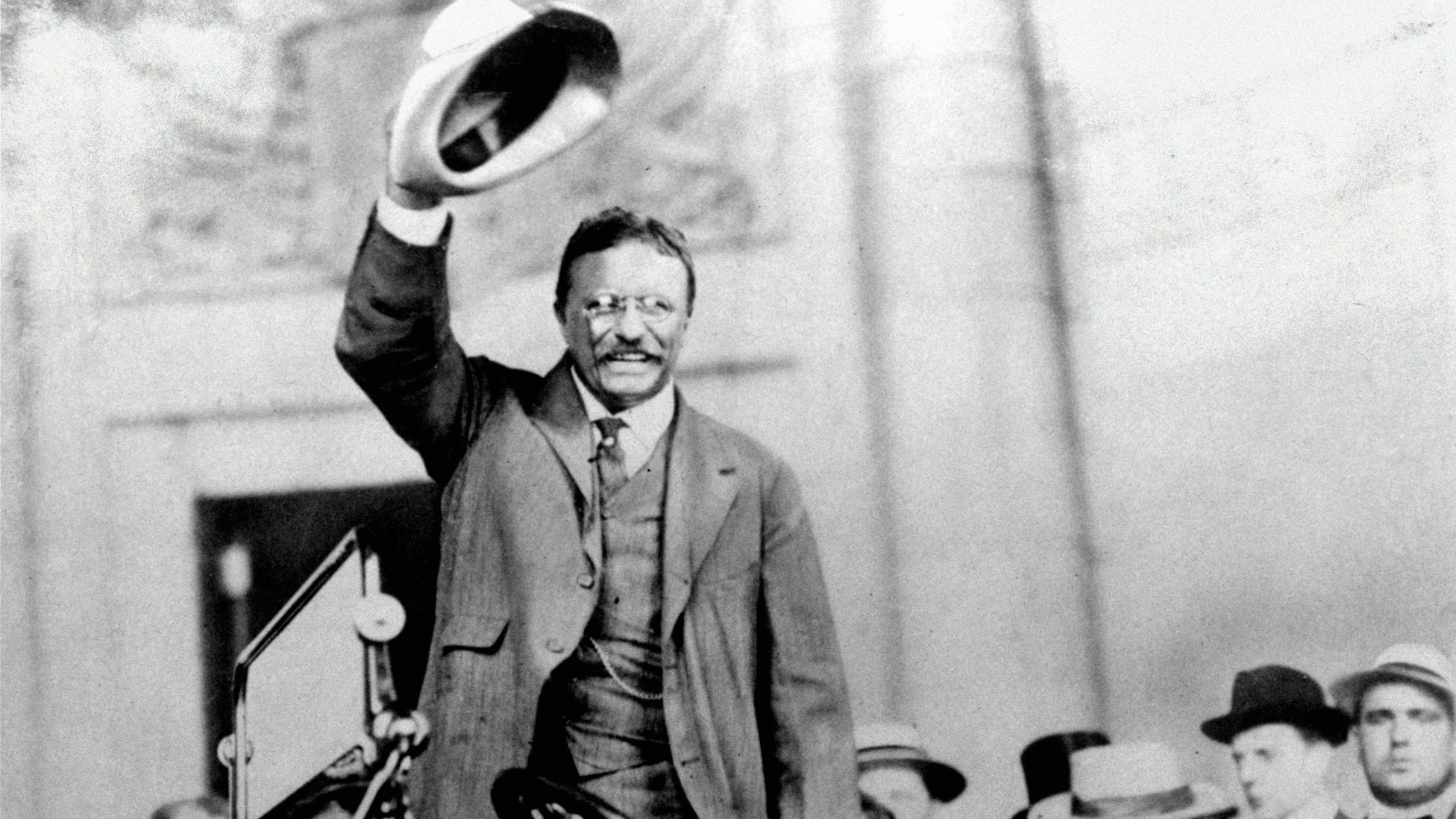
Theodore Roosevelt
Credit: Associated Press
Theodore Roosevelt was another president from New York who was connected to many of the prominent members of New York society that would later be on board Titanic.
The Roosevelts employed the services of future Titanic 1st class passenger and survivor Helen Churchill Candee who was a famous interior decorator in Washington DC. She was commissioned by President Roosevelt to assist First Lady Edith Roosevelt with finding two Louis XVI chairs for her dressing room.
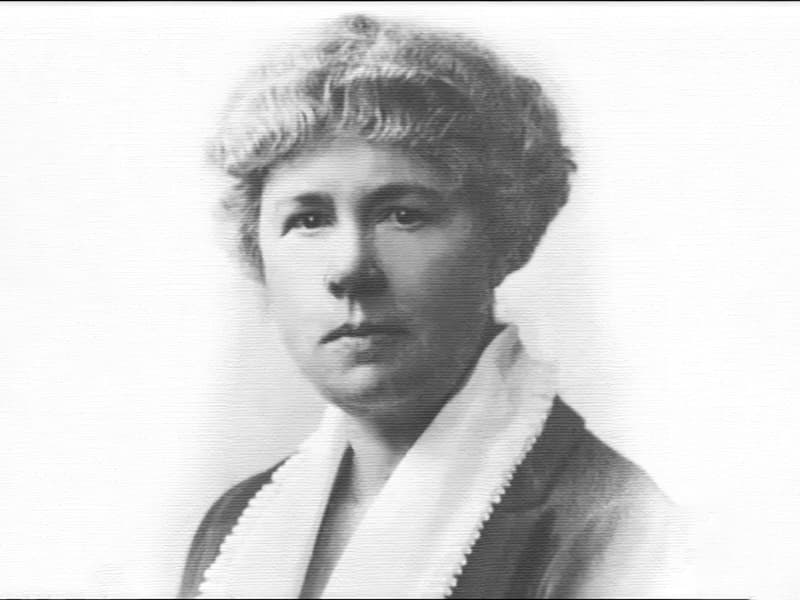
Credit: Encyclopedia-Titanica
Marie Grice Young
Future 1st class passenger and survivor Marie Grice Young was a gifted pianist from Washington DC. Her father was a musician and passed the gift to her. During her time teaching piano in Washington DC, she was called upon by First Lady Edith Roosevelt who requested that she teach piano to her sons Quentin and Kermit. She also taught the Roosevelt daughter Ethel. The Roosevelt children gave recitals with Marie’s other students and President Roosevelt would come and listen to his children playing. When the Titanic sank, the press fabricated an account by her in which they connected her to another passenger and Titanic victim Major Archibald Butt due to the fact they both worked for Roosevelt in the past. The truth was that Marie barely knew Archie. Though she did remember seeing him on board, the press tried to tell a story of him saying a final good-bye to her when her boat was lowered. When Marie learned that President Taft had heard of her account, she wrote to the President and explained that the account was faked, assuring him that if it had been true, she would have written the story to him immediately.
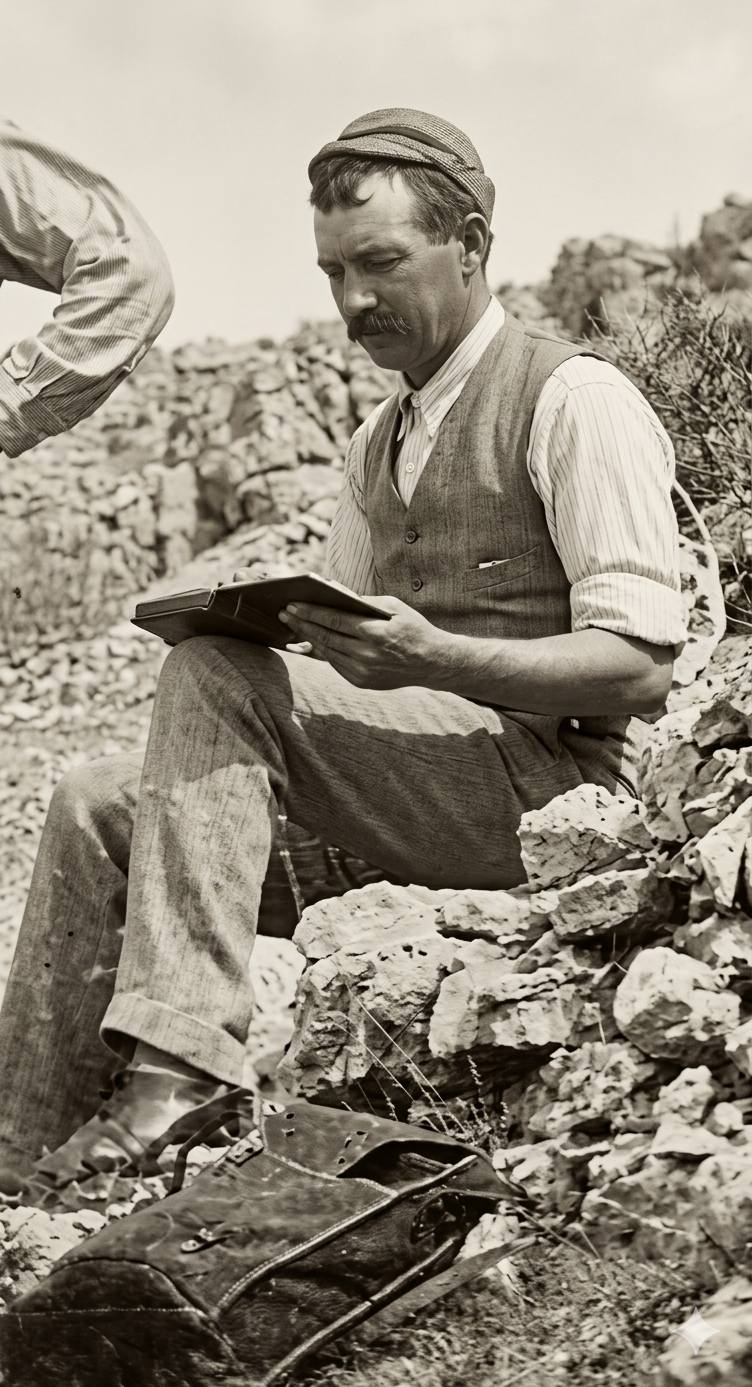
Francis D. Millet
JN Collection
Francis Davis Millet was one of the most influential artists of his generation internationally. I am not sure when he met President Theodore Roosevelt, but their letters indicate that they were personal friends. Roosevelt did rely on Millet artistically. He placed Millet on the Tokyo Exposition Commission which aimed to encourage relations between the American and Japanese people. He was also a consultant at Roosevelt’s direction on the Augustus Saint-Gaudens design of the double eagle $20 gold coin. Millet also co-founded and served as vice-chairman on the United States Commission of Fine Arts which oversees the design and aesthetics of all construction in the Washington D.C. area aside from a few main buildings to this day. The Fine Arts Commission has evolved over the years since then.
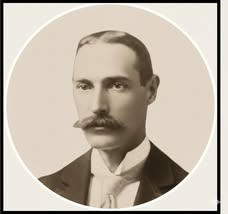
Colonel John Jacob Astor
Credit: New York Tribune/JN Collection
Titanic 1st class passenger and victim John Jacob Astor IV was connected to the Roosevelt family. He was related through his sister Helen who was married to James Roosevelt “Rosy” Roosevelt. The Astor mansion in Rhinebeck was not far from the Roosevelt property Hyde Park and the families often interacted. Rosy was a 2nd cousin of President Theodore Roosevelt (and older half-brother of President Franklin Delano Roosevelt). Following Astor’s death, Rosy was one of the executors of his estate, ensuring that Colonel Astor’s final wishes were carried out for his widow Madeleine and his children.
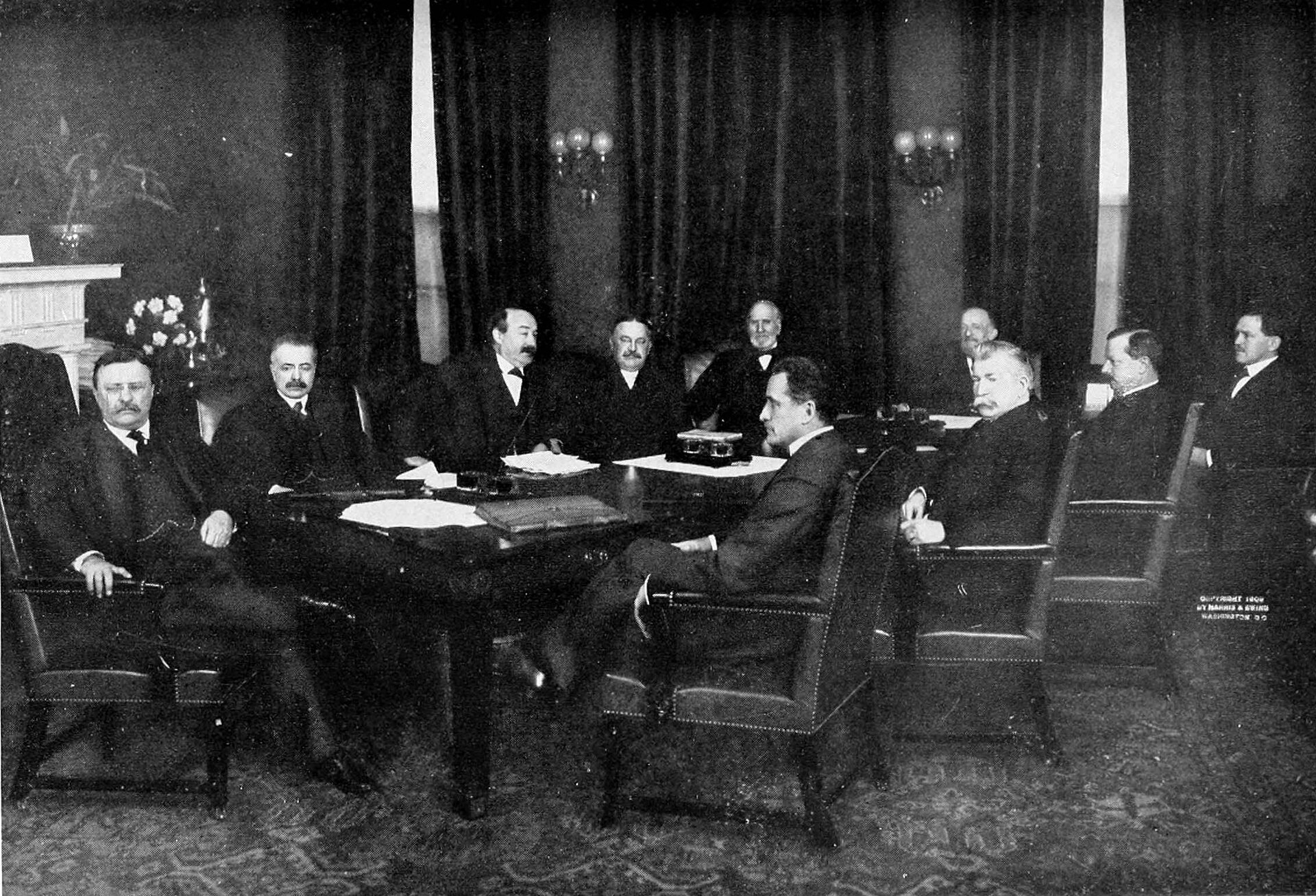
President Roosevelt (head of the table) and his cabinet including Isidor Straus's brother Oscar (foot of the table opposite Roosevelt)
Credit: Library of Congress
The Straus family knew Theodore Roosevelt through New York politics and business. Although they were Democrats, the Strauses liked Theodore Roosevelt and respected him. Oscar was the first Jewish person to be a cabinet secretary when in 1906, Roosevelt nominated him to be Secretary of Labor. Oscar later switched to running for Governor of New York with the Bull Moose Party in 1912. He unfortunately did not win. After the sinking, Roosevelt sent his condolences that he could not attend Isidor and Ida’s funeral service. On April 18, 1912, Theodore Roosevelt sent a telegram to Mayor Gaynor of New York which said, “I wish I were present in New York this afternoon to join with my fellow citizens in expressing our grief at the shocking catastrophe of the Titanic and our deep sympathy with the kinsfolk of those who have perished.” Theodore Roosevelt
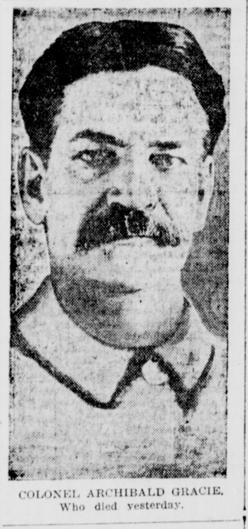
Colonel Archibald Gracie IV
Credit: New York Tribune
Archibald Gracie IV was connected to the Roosevelts through family and social circles. Gracie’s uncle, James King Gracie, was married to Roosevelt’s aunt, Anna Bulloch. Gracie and Roosevelt were friends who did write to each other on occasion and saw each other at family and social events. Some of Gracie’s letters to Roosevelt are preserved in the Library of Congress including Gracie’s response to a letter of condolence Roosevelt sent to him over the loss of his daughter, Constance Julie Gracie. Most of the letters from Roosevelt to Gracie have unfortunately been lost to history, unfortunately. However, there was a letter that came up for sale a few years ago which had Roosevelt giving Gracie his endorsement to research for his book using papers and files in the US government about the Battle of Chickamauga. Gracie’s research culminated into a book, “The Truth About Chickamauga.” He was on the Titanic following this book’s publication and while on board, got to know Isidor Straus who had worked with the Confederacy and had also shared mutual friends. Gracie was one of the most famous survivors, writing a book afterwards about his experiences.
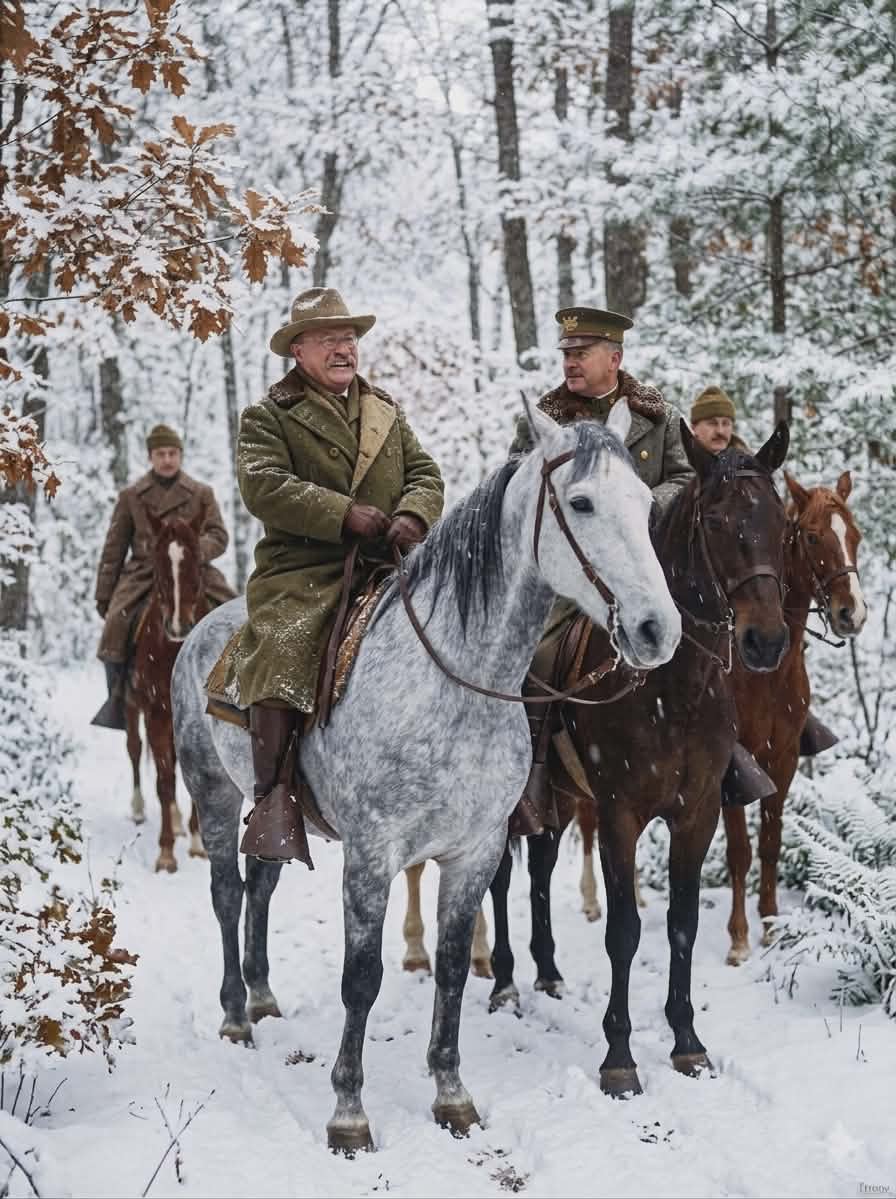
President Roosevelt and Archibald Butt when they rode 100 miles in a single day. This image recreates that event using AI since no photos are known to exist of that event.
Major Archibald Butt joined the Roosevelt White House late in his 2nd term. He took the assignment in April 1908, a short time after he got back from serving in Cuba. Though he knew Roosevelt for the last year of his presidency and they were of two different political parties, he and Roosevelt developed a strong bond. Especially when Roosevelt learned Archie and his family were from Georgia which reminded Roosevelt of his own mother who was from a different part of Georgia. That shared southern heritage and Archie’s likeability and overall willingness to deal with unexpected craziness that happened when working in the White House caused Roosevelt to appreciate Archie, which is a high compliment from the high-energy president.
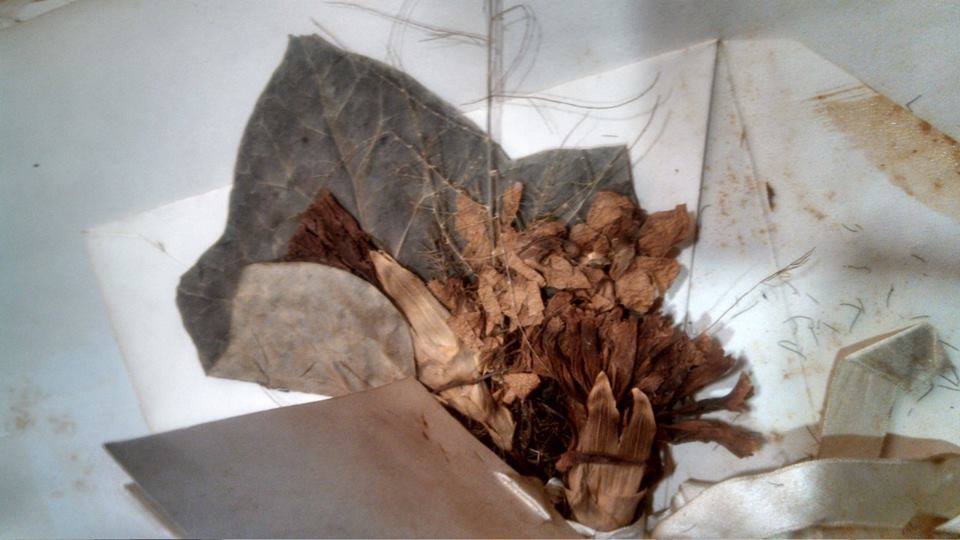
Flowers sent to Archibald Butt by the Roosevelt family.
Credit: Georgia Archives/JN Photography
On October 26, 1908, Archie’s mother Pamela passed away. Her death greatly affected Archie and both Theodore and Edith Roosevelt as well as multiple Roosevelt children wrote Archie condolence letters.
On January 13, 1909, Roosevelt decided to prove a point. He wanted all officers in the Army to be able to walk 50 miles or ride or bicycle 100 miles over the course of 3 days. This was not well received. On that cold overcast day with the end of his presidency looming within a few months, Roosevelt decided to ride 100 miles in a single day. He chose Archie to join him for this along with the Navy Surgeon General and a naval physician to join him on this. They started early in the morning, rode to Warrenton, VA where Roosevelt gave a short speech, and then rode back to the White House. They completed a total of 104 miles in a single day. Following the sinking of the Titanic, on April 20, 1912, Captain McCoy of the general staff of the Army, received a telegram from Former President Roosevelt which said: “Am deeply shocked and grieved about poor Archie Butt. If there is any news about him pray let me know.”
Mayor Gaynor of New York responded to Roosevelt’s telegram and said: “Dear Mr. Roosevelt-I thank you very much for your expression of sympathy for those who perished or suffered by the Titanic disaster. The fund for their relief and the relief of their dependents is growing rapidly. Sincerely yours, W.J. Gaynor.”
As Roosevelt reflected on his friendship with Archibald Butt, he corresponded with Archie’s brother Edward and told him, “No one outside of his family more loved Archie than I.”
William Howard Taft
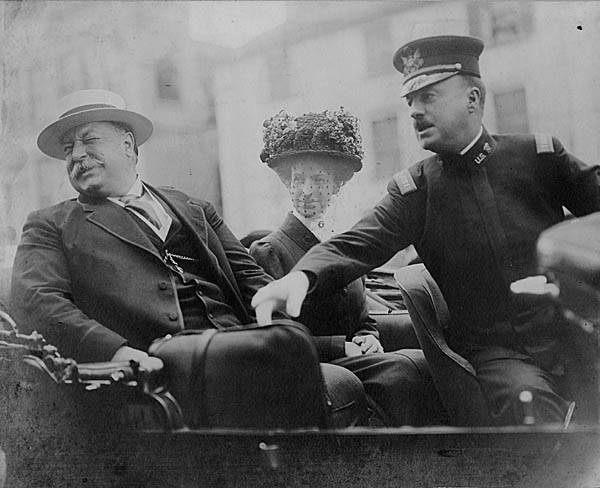
President William Howard Taft, Helen "Nellie" Taft, and Archibald Butt
Credit: Library of Congress
President Taft was the President of the United States when the Titanic sank on April 15, 1912. Of all the presidents, Taft is the one most connected to the disaster.
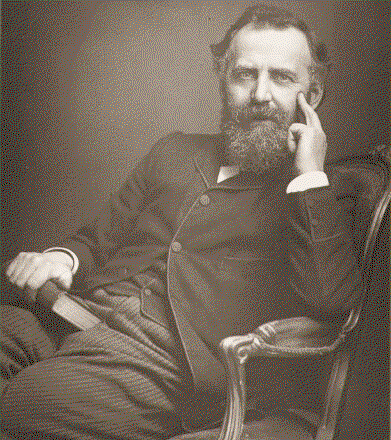
William T. Stead
Credit: National Portrait Gallery
William Thomas Stead was a noted spiritualist, author, and journalist among many other interests and accomplishments. One of the many causes he advocated for that he was most passionate about was pacifism. He used his platform to oppose wars which made him very unpopular and controversial at different points, but also made him well known for his views. His pacifism caught the attention of the American billionaire Andrew Carnegie and he worked with Carnegie on multiple efforts for peace. In 1912, President Taft invited Stead to attend a Peace Conference being held at Carnegie Hall. He boarded the Titanic as a 1st class passenger and sadly didn’t survive. He was last seen in the 1st class Smoke Room reading a book.
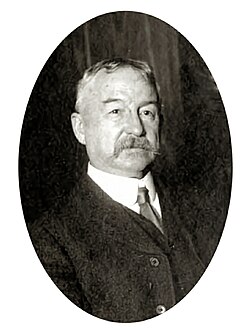
Francis D. Millet
Credit: Minnesota State Capitol
Francis D. Millet worked with both Roosevelt and Taft on the Commission of Fine Arts and different projects requiring their help and expertise. He was also involved in the planning and design of the Lincoln Memorial. In 1911, Millet was placed by Taft in charge of a committee for the preservation of Niagara Falls in which they surveyed the waterfall and reported to Congress with recommendations. In 1912, he went to Europe with his good friend and housemate Major Archibald Butt after convincing Taft to let Archie go to Europe with him, fearing for his declining health.
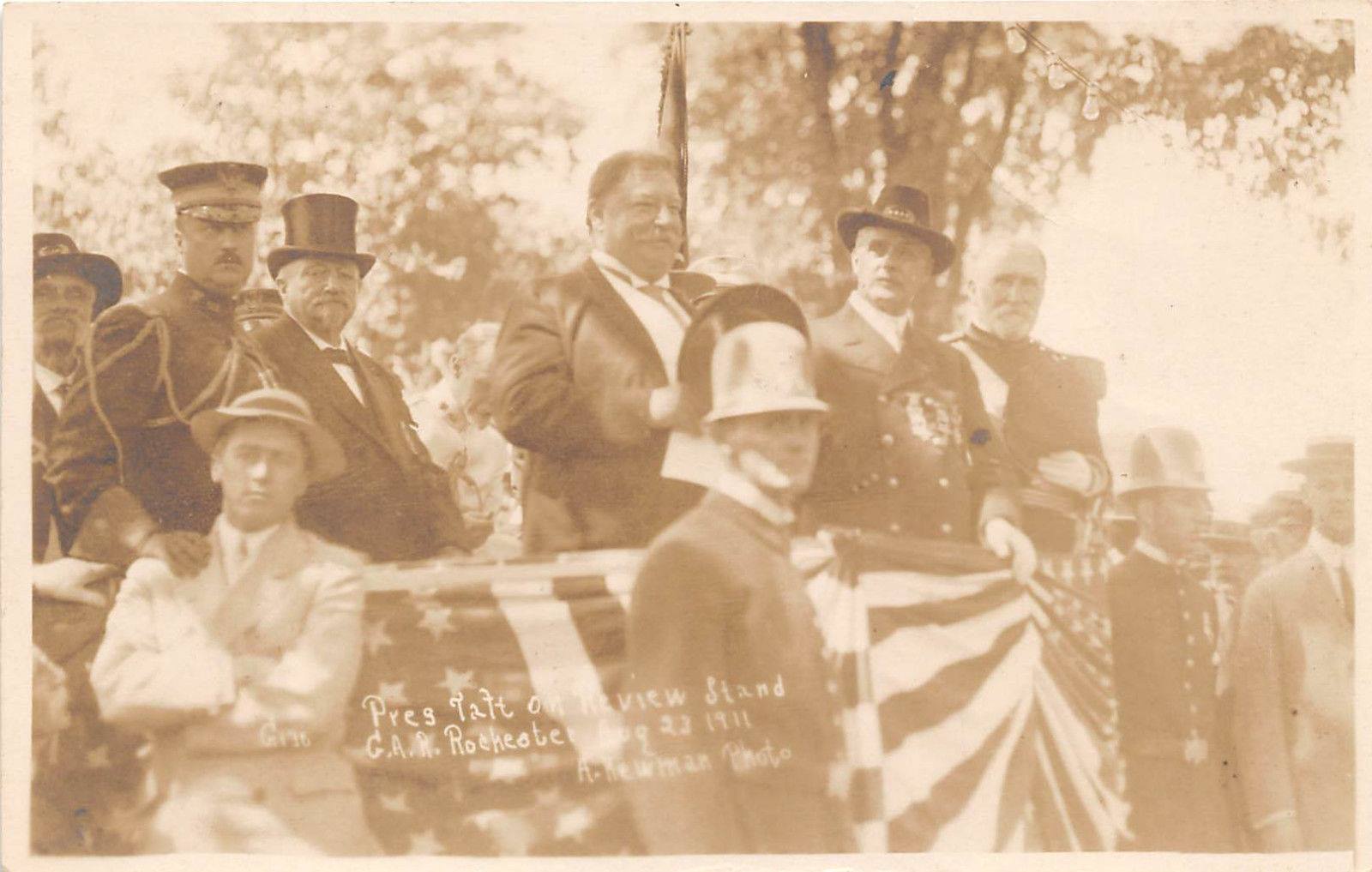
President Taft with Archibald Butt on the left
JN Collection
The most prominent connection between Taft and the Titanic stems from Titanic 1st class passenger and victim Major Archibald “Archie” Butt. Archie and Taft’s relationship started prior to the White House when Archie was a quartermaster in the US Army and Taft was the Governor-General of the Philippines. Archie was a young man from Augusta who wanted to be in the military since his teenage years or early adulthood. Taft was a former judge who hoped for the Supreme Court and instead was made Governor of the Philippines by President McKinley, sending his life on a different trajectory.
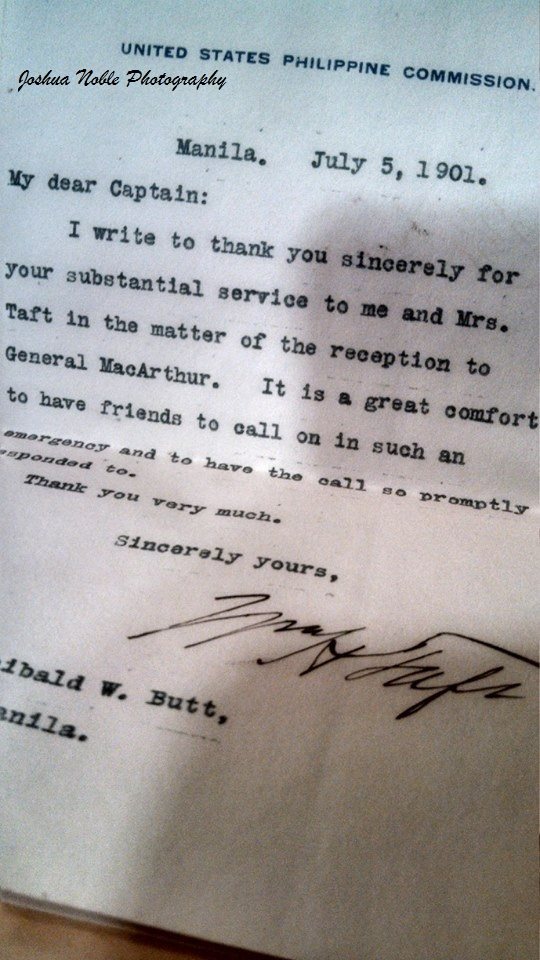
A letter from Taft to Archibald Butt when they were in the Philippines. The context of the letter shows a respect forming from Taft towards Archie.
Credit: Georgia Archives/JN Photography
When Taft briefly was Provisional Governor of Cuba in 1906, Archie was also assigned there as Depot Quartermaster. When Taft became Secretary of War causing him to move to Washington D.C., Archie was also assigned to the White House as Military Aide to President Theodore Roosevelt. With the popular Theodore Roosevelt leaving office, he endorsed Taft to be his successor. When Taft became President of the United States in 1909, he asked Archie to stay on as Military Aide since they already knew each other well. Taft’s 4 years in the White House deepened their friendship into almost a brotherhood. Taft relied heavily on Archie for not only military and ceremonial duties. Taft would have many sleepless nights and Archie would stay up with him playing cards and conversing. Archie helped cover when First Lady Helen Taft had a stroke and temporarily lost the use of an arm and a leg.
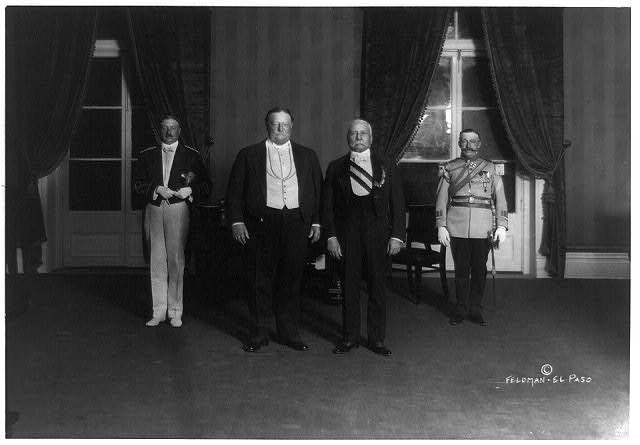
Archibald Butt, President Taft, and President Diaz
Credit: Library of Congress
On October 16, 1909, President Taft became the first President to meet the President of Mexico, President Diaz in the hopes of improving American-Mexican relations. To commemorate the meeting, this famous photo was taken with Archie seen on the left.
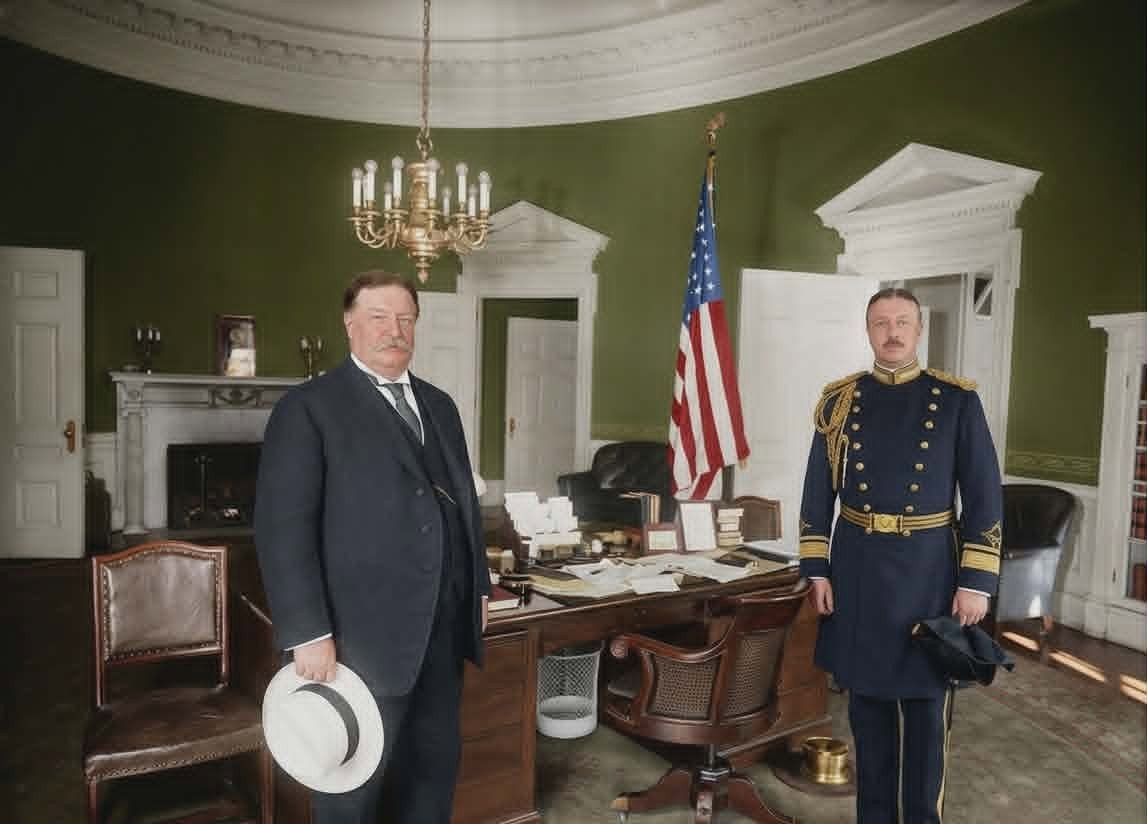
President Taft and Archibald Butt in the first Oval Office. Since no photos of them in this office together exist, this historic moment was recreated using AI.
On November 15, 1909, Taft became the first President to ever occupy the Oval Office. It was a lot simpler than what we know now and it has undergone a lot of changes with each president since. Archie was not present when Taft first sat behind his desk in that room due to having a visitor on that day, but he was able to see the new Oval Office later.
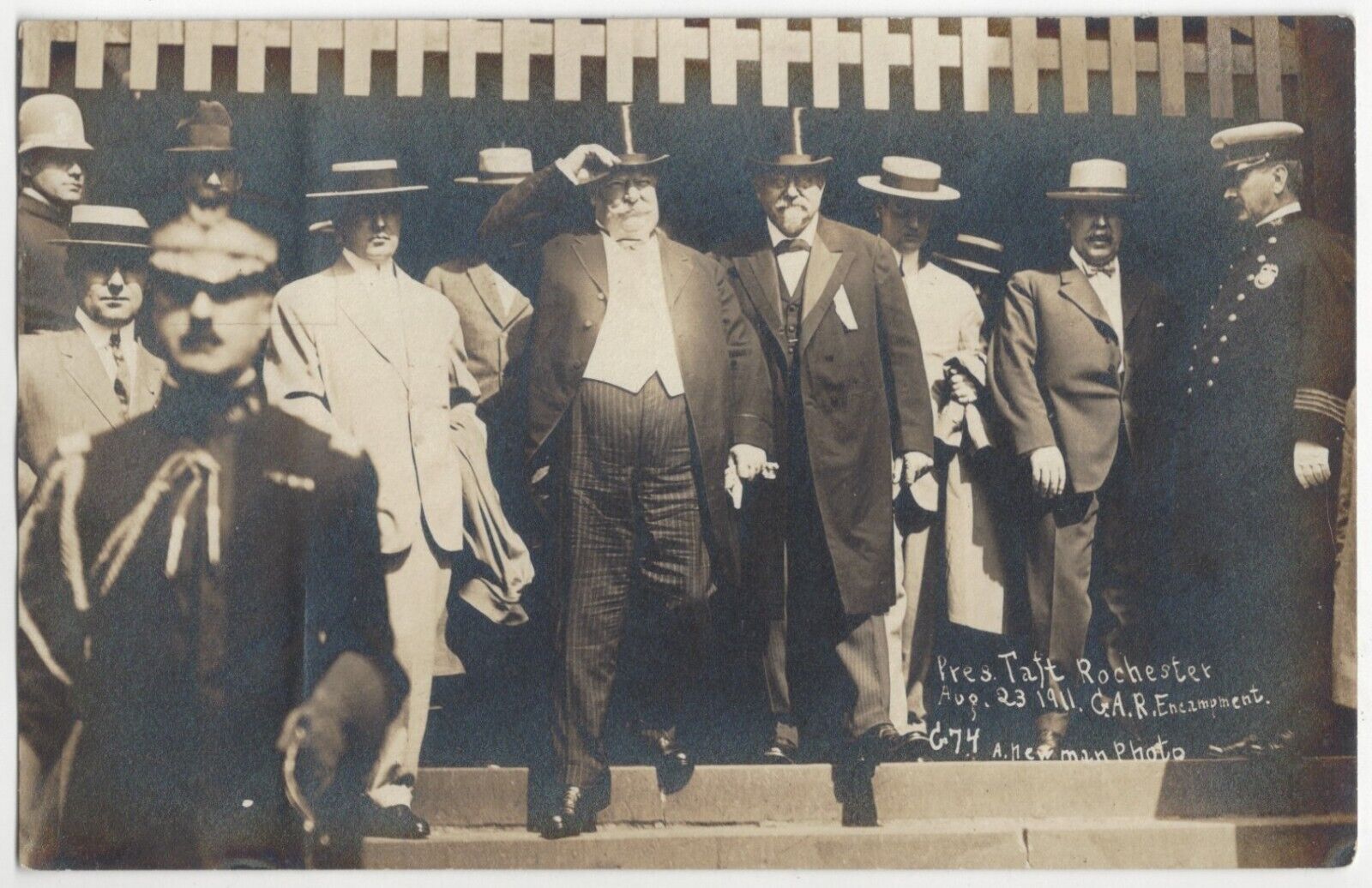
Archibald Butt (left) and President Taft (center)
JN Collection
Taft famously said that the White House was the loneliest place in the world, but I believe Archie made his time in the White House more bearable. Taft is a misunderstood President because most people only know him to be the heaviest President in history who got stuck in a bathtub. The story of the bathtub is apocryphal and likely not true. The truth is that Taft was born to be a judge and thought like one. Unlike Roosevelt who was quick to spring to action, Taft would weigh options and do things judiciously, slower than some would have liked. For many reasons, Roosevelt decided to run for the 1912 election against Taft. This move found Archie torn because he loved both men as friends. He was very loyal to them, and he felt his loyalties being split between them both. This and his 70 hours or more per week of work in the White House for several years led to his decline in health. In early 1912, Archie’s friend and housemate Francis Millet approached Taft and requested that they go on holiday for some much needed and deserved rest. Taft granted the request. Millet needed to go to Rome on business as the chairman of the American Academy in Rome and Archie had a noticeable decline in health shortly before that. On top of that, Roosevelt and Taft were now running against each other and fighting which divided Archie’s fierce loyalties. Taft sent Archie to meet with the Pope and King of Italy. Prior to leaving, Archie met with members of the State Department who coached him on the etiquette for the important people he was meeting. Archie and Millet boarded the SS Berlin and went to Europe together to Rome. Upon arriving, they went their separate ways. Archie had an audience with Pope Pius X and King Victor Emannuel III of Italy in which he conveyed the President’s warm wishes and they spoke on various matters. Pope Pius showed particular interest in the state of the Catholic Church in America. Pope Pius gave him a signed photo and a letter for President Taft. After that, Archie went to Berlin where he almost met Kaiser Wilhelm II and then he went to Paris where he met with American ambassador Francis Bacon.
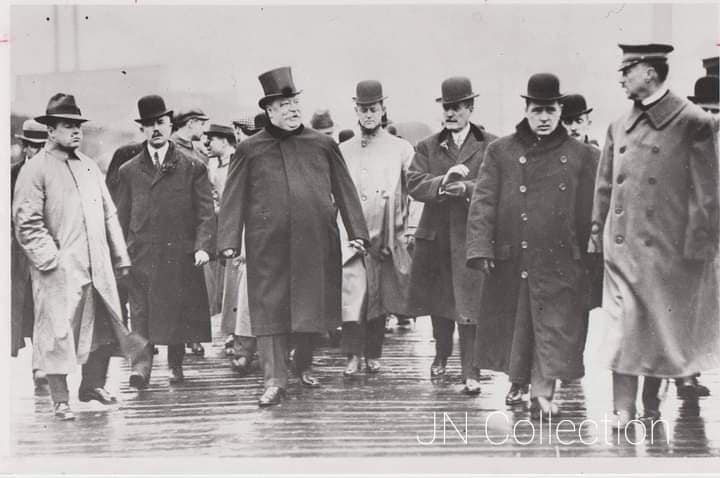
President Taft (center), Myron Herrick (3rd from the right), and Archibald Butt (far right).
JN Collection
Bacon and his family booked passage to return to America on the Titanic, but his replacement appointed by Taft, Myron Herrick, was delayed which caused them to cancel their passage. After that, Archie went up to his brother Edward’s home in England where he spent time with his brother’s family. He boarded the Titanic on April 10, 1912 as a 1st class passenger at Southampton. Archie and Taft worked so closely together, you can see Archie in many photographs of Taft. Archie was on the Titanic with one of his best friends, Frank Millet. Archie had been working with hardly any break all hours of the day or night for years and needed to rest. He and Millet went on holiday to Europe, met Pope Pius X and other dignitaries on behalf of Taft, and saw relatives. Archie and Millet went separate ways in Rome and met back on board the Titanic. On the night of the sinking, Archie was apprehensive about returning home. Particularly since his two friends Roosevelt and Taft were fighting and campaigning against each other, dividing Archie’s loyalties. He was on board with Clarence Moore who was one of his friends from Washington DC. Francis Millet boarded in Cherbourg later that day. Archie was a popular figure on the Titanic. Being someone who had the President’s ear as well as someone who possessed many social graces along with being fun to be around which made him well-loved. On the night of the sinking, Archie got into a deep conversation with fellow passenger Marian Thayer about life and aspirations. They made an appointment to meet the next day so Marian could show him a trick that would help him with his nerves. Archie, Moore, and Millet were in the 1st class Smoke Room when the Titanic struck the iceberg. Many men ran out to see the iceberg as it disappeared into the darkness and then returned to their games. Archie, Moore, and Millet continued playing until leaving for their respective cabins. Archie was observed by fellow passenger Eleanor Cassebeer burning papers. It is assumed he wouldn’t leave the papers meant for the President to potentially fall into the wrong hands. Archie, Millet, and Moore were seen on deck as the boats were being lowered. Accounts vary on whether they were calmly standing back and making no effort to get into a boat or taking charge and actively assisting with the loading of the boats, though the latter is the most likely. Archie, Millet, and Moore did not survive the sinking.
Following the disaster, Taft got word of the sinking while he was attending the theater. He returned to the White house and sent a telegram to White Star Line Vice President PAS Franklin asking about the fate of his military aide. However, Franklin could not give a definite answer. Little information was sent on land from the Carpathia which picked up the Titanic survivors aside from lists of survivors which were incomplete. Washington DC society saw multiple events canceled or postponed including gatherings of friends of the Taft children, dinners for diplomats, societal balls, and more. From the US Senate, a Senator from Michigan named William Alden Smith attempted to meet with Taft in order to ask if he would call for an inquiry. A secretary for Taft got back with Smith and informed him that he did not intend to take such action. Taft began getting messages from multiple people including Archie’s brothers inquiring about his fate, though many suspected he hadn’t survived. On April 17, Senator Smith met with Taft about the US Senate Committee which were tasked with investigating the Titanic disaster. He arranged to have the help of the US Navy with escorting the Carpathia to New York and ensuring that the people subpoenaed for the inquiry would be held there. As the Carpathia approached New York, Taft dispatched the USS Salem and the USS Chester partially motivated by finding out about Archie Butt and Clarence Moore’s fates. There was also an attempt to find out about Oscar Scott Woody, a postal clerk whose widow petitioned Taft to find out any information he could. The Carpathia did not respond, choosing primarily to send the names of the survivors.
When the Carpathia arrived in New York on April 18, lists of survivors and victims were officially confirmed. On that same day, Taft announced that he had given up hope that Archie survived which he knew all along. He stated that, “I knew that Major Butt had gone down. He was a soldier and was on deck where he belonged.” He did have a representative go to Halifax to see if any of the bodies recovered belonged to specific people including Archie. Unfortunately, none of them did. In addition, messages began pouring in from other nations. Taft stayed up until midnight that night hoping to get information from the survivors when they disembarked and were interviewed by reporters about Archie’s final moments. On April 19, Taft received his final letter from Archie which gave an update on his trip. In the aftermath, the press talked up the heroism of Archie, Millet, and Moore. However, yellow journalism muddied the truth as reporters had the tendency to throw famous names or stories into accounts to spice them up or straight up invent accounts.
One such example was from Titanic survivor Marie Young. A story reportedly from Marie Young detailing Archie on the Titanic and telling a tender story of how he got her into a lifeboat appeared. It is probable that owing to the fact both of them worked for President Roosevelt, a reporter decided to make the connection in order to fabricate this account. Marie Young wrote to Taft when she saw it in the newspapers disavowing that account, saying she barely knew Archie and she hardly saw Archie on the ship. Another survivor, Marian Thayer, wrote an account to President Taft of her last conversations and sightings of Archibald Butt. By this point, the Mackay-Bennett had already been dispatched. Taft watched the lists of those recovered, hoping Archie would be named. Millet’s body was later recovered, but Archibald Butt and Clarence Moore did not appear on them.
King George to Pres. Taft: “The Queen and I are anxious to assure you and the American nation that of the great sorrow which we experienced at the terrible loss of life that has occurred of American citizens as well as my own subjects by the foundering of the Titanic. Our two countries are so intimately allied by ties of friendship and brotherhood that any misfortune which affects the one must necessarily affect the other, and on the present terrible occasion they are both equal sufferers.”
George R.I. in response to President Taft said: Pres. Taft to King George: “In the presence of the appalling disaster to the Titanic the people of the two countries are brought into community of grief through their common bereavement. The American people share in the sorrow of their kinsmen beyond the sea. On behalf of my countrymen I thank you for your sympathetic message.”
King Albert of Belgium to Pres. Taft: I beg your excellency to accept by deepest condolence on the occasion of the frightful occasion to the Titanic, which has caused such mourning in the American nation.
Pres. Taft to King Albert: “I deeply appreciate your sympathy with my fellow-countrymen who have been stricken with affliction through the disaster of the Titanic.”
President Taft received sympathy messages from the three Cardinals in America along with expressed hopes that laws regarding ocean travel be changed. He also received letters from survivors who knew Archibald Butt and other friends of his on board. In Washington DC, the National Cathedral, Suwanee Tennessee, and Augusta, GA, memorials were made for Archibald Butt.
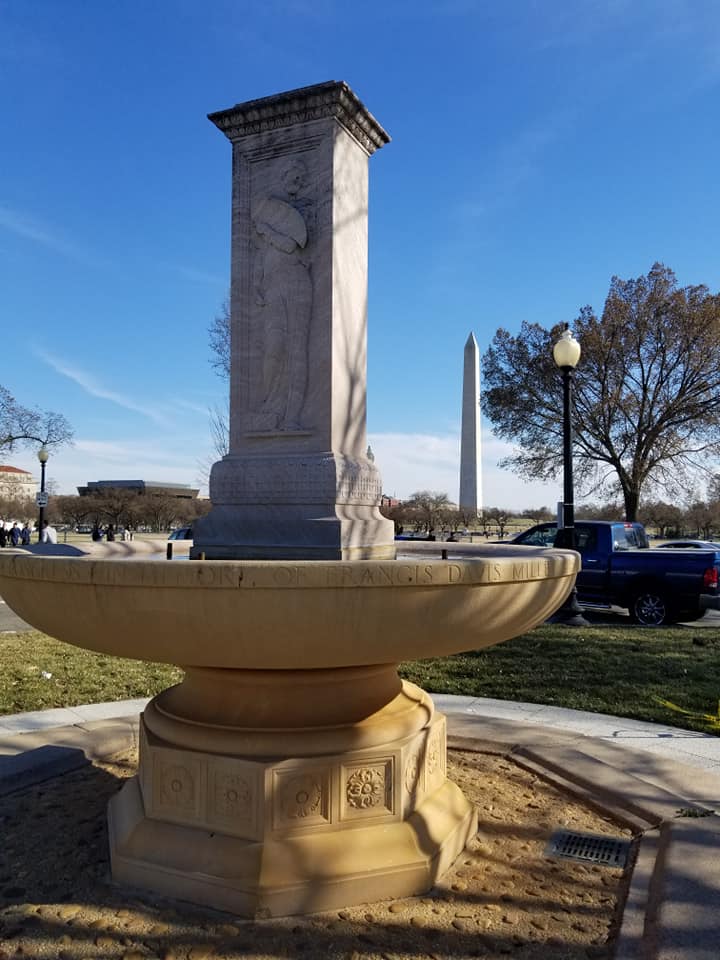
Butt-Millet Fountain in Washington DC
JN Photography
Taft approved a fountain near the South Lawn of the White House which President Taft signed off on called the Butt-Millet Fountain, honoring the contributions of both men. There are two reliefs on the fountain. One with a military man with a sword and shield representing Archibald Butt and the other has a man with a palette and paint brush representing Millet. It was created by David Chester French, the same sculptor who created the statue of Lincoln in the Lincoln Memorial. Taft’s family also participated in fundraisers for the Titanic Relief Fund. First Lady Helen Taft also donated the first dollar to a Women’s Titanic Memorial on April 29, 1912. Mrs. Taft was heavily involved with the creation of this memorial.
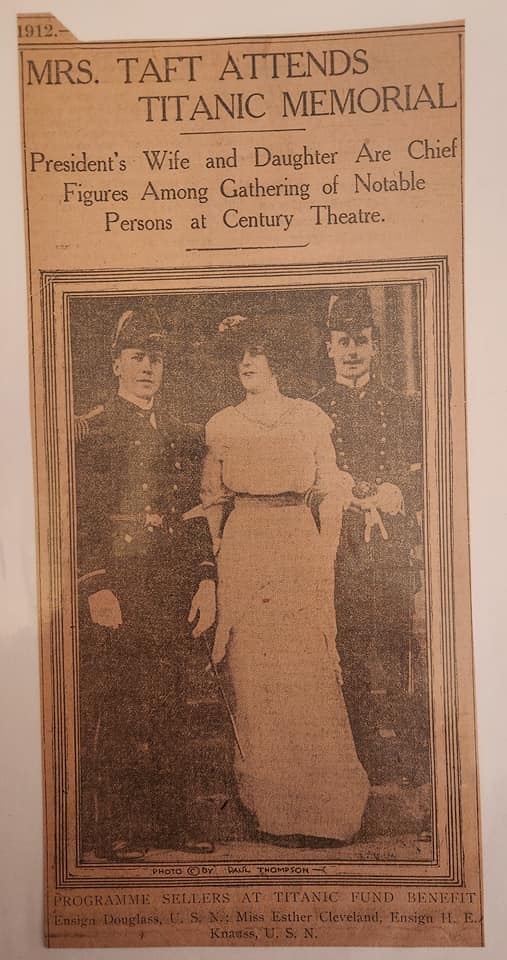
First Lady Nellie Taft at the Century Theater Benefit for a Titanic Memorial.
JN Collection
On December 1, 1912, Helen Taft attended a Titanic Memorial Benefit at the Century Theater which raised money for that memorial. For the memorial’s sculptor, the committee chose a woman named Gertrude Vanderbilt Whitney in 1914. Raising money for this memorial became a long, time consuming effort.
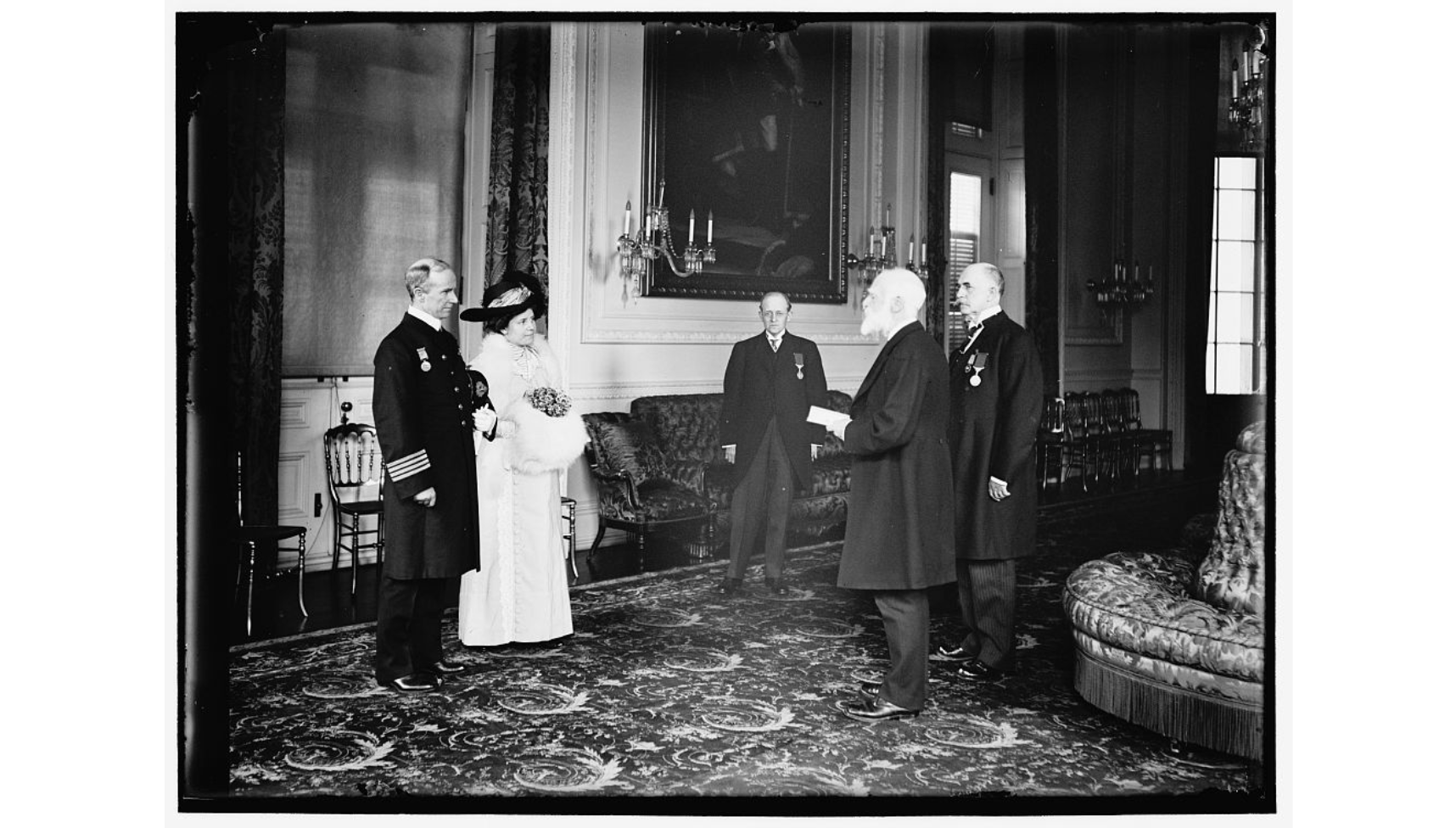
Rostron receiving the Congressional Gold Medal
Credit: Library of Congress
Near the end of his term on March 1, 1913, Taft awarded Captain Arthur Rostron who was captain of the Carpathia when they rescued the Titanic survivors with a Congressional gold medal. The artist who designed the medal was John Flanagan who later designed the famous George Washington image on the US quarter. The ceremony took place in the White House and the US Ambassador to Great Britain formally presented the medal to Rostron after Taft gave a short speech.
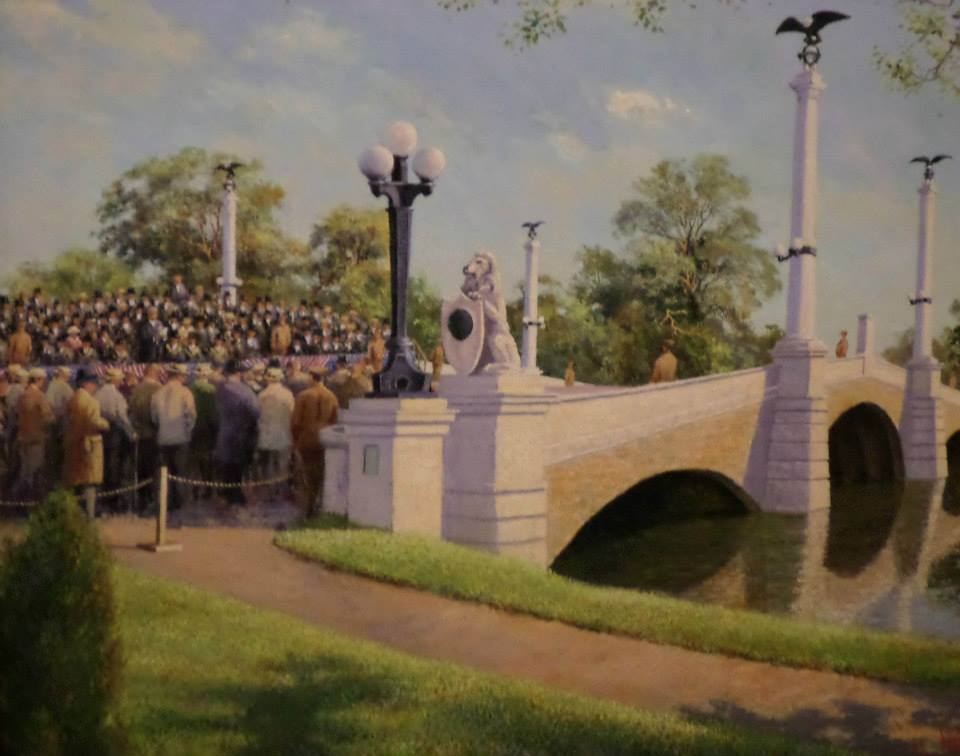
The Dedication of Butt Memorial Bridge in 1914
Credit: Augusta Museum of History
In 1914, former president Taft travelled to Augusta where he dedicated Butt Memorial Bridge speaking of what a great representative of the South. He said: “If Archie could have selected a time to die he would have chosen the one God gave him. His life was spent in self–sacrifice, serving others. His forgetfulness of self had become a part of his nature. Everybody who knew him called him Archie. I couldn't prepare anything in advance to say here. I tried, but couldn't. He was too near me. He was loyal to my predecessor, Mr. Roosevelt, who selected him to be military aide, and to me he had become as a son or a brother.” Years later when President Taft passed away, one reporter commented, “They’re all gone now. The rough rider, Big Bill, and Archie Butt who loved them both.”
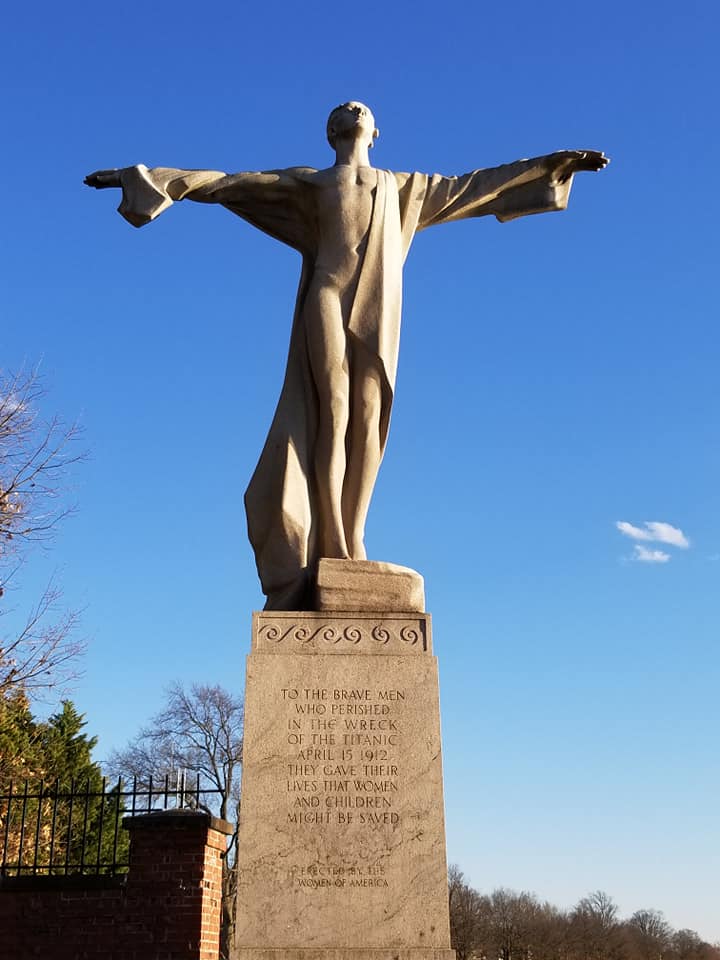
Women's Titanic Memorial
JN Photography
A year after her husband’s death, former First Lady returned to Washington DC in 1931 where she attended the unveiling of the Women’s Titanic Memorial. Even years later, the Titanic still affected the Tafts.
Woodrow Wilson
President Woodrow Wilson was ultimately elected in 1912 because Theodore Roosevelt ran with the Bull Moose Party and William Howard Taft as the Republican incumbent and nominee, which split the Republican vote in the general election. This split caused Wilson who had the Democratic Party united under him to win. Wilson didn’t have many connections to the Titanic, but there were a few.
Wilson spent part of his childhood growing up in Augusta, GA where his boyhood home was down the road from future Titanic passenger Archie Butt. We don’t have documented proof that the two knew each other as boys, but it is possible.
Woodrow Wilson’s first wife Ellen Wilson (who sadly died while he was in office) was a client of Titanic 1st class passenger and survivor Lady Duff Gordon who was one of the most popular fashion designers at the time.
When the Titanic sank, then-governor Woodrow Wilson who was campaigning for President called the office in New Jersey and authorized them to set up a Titanic Relief Fund to help assist with the survivors and those who lost their breadwinners in the disaster.
In 1918, there was a Women’s Rights March down the streets of Washington DC to try and convince Wilson to support the 19th Amendment. One of the main leaders of that march was Titanic survivor Helen Churchill Candee.
In 1919, Wilson traveled on board the USS George Washington (ID #3018) to attend the Paris Peace Conference which led to many important things diplomatically, namely the end of WWI and the Treaty of Versailles. The SS George Washington was one of the ships that sent an ice warning to the Titanic on April 14, 1912.
Warren G. Harding
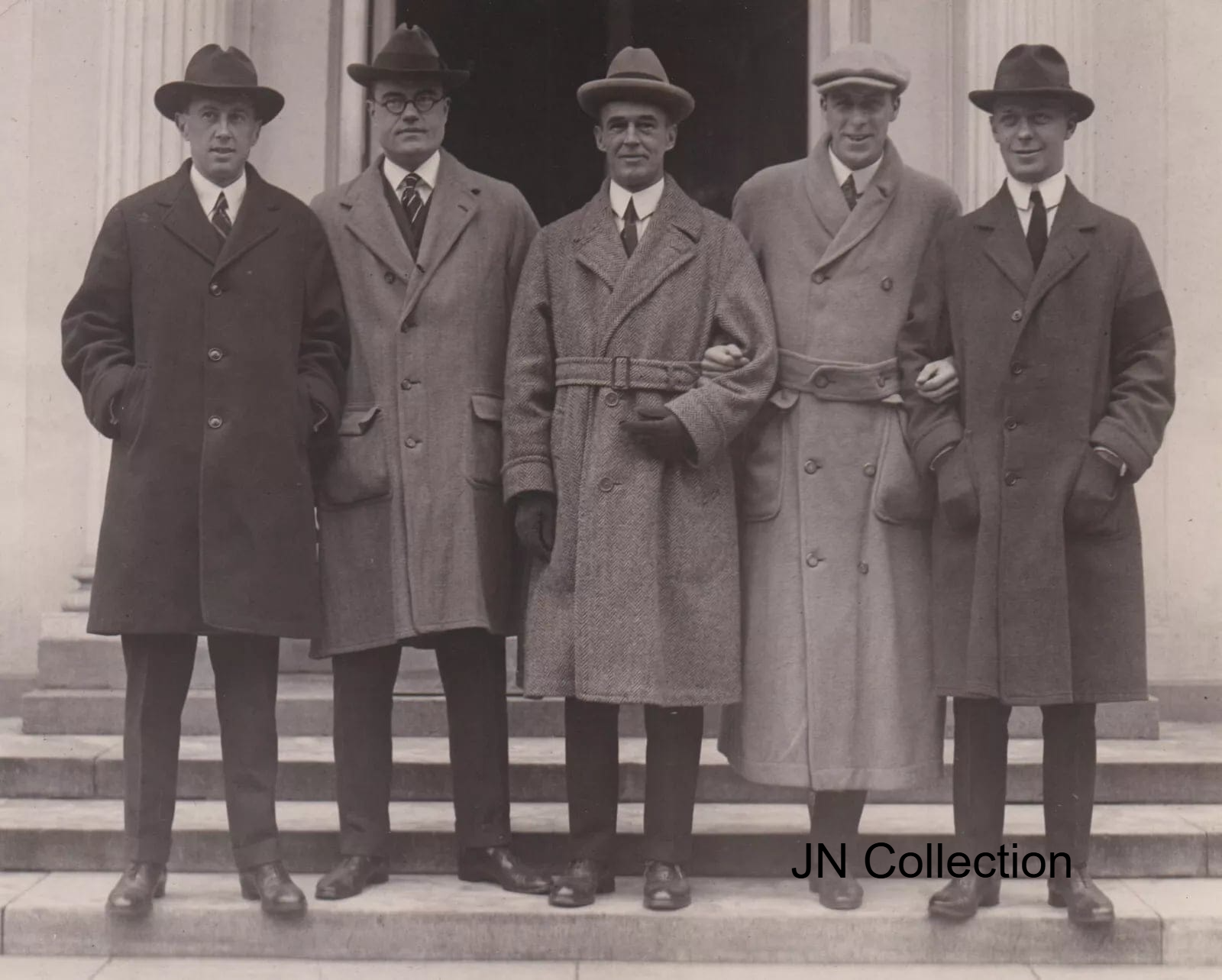
In 1921, President Harding invited the members of the American team that competed in the Davis Cup to meet him. Among them was Titanic survivor R. Norris Williams. Williams barely survived the Titanic and nearly lost his legs due to frostbite on the Carpathia. He persevered and had a legendary career after that. Above is a photo from when Williams (far left) and his teammates were at the White House.
Herbert Hoover
In April 1918, then-head of Wartime Food Administration Herbert Hoover attended a Pittsburg Press Club dinner. During WWI, he along with President Wilson called for shaming waste and extravagance during the time of war which fashion designer, and Titanic survivor Lady Lucile Duff-Gordon disagreed with. Lady Duff-Gordon was a speaker at this dinner and when asked about economy in dress, Duff-Gordon responded with, "I thought it was the duty of every wife, sweetheart and mother to spend as much on dress as they could possibly afford in order to make the best of themselves for the sake of the men in the trenches."
In 1930, President Hoover nominated Eugene Meyer as Chairman of the Federal Reserve. Eugene was a brother of Titanic victim Edgar Meyer and brother in law to Leila Saks Meyer. Eugene was one of the executors of Edgar’s estate of which most of it went to Leila and their daughter. Eugene Meyer became a central figure as the country plunged into the Great Depression and Eugene Meyer tried to help get the country out.
Midway through President Hoover’s term, he and his wife Lou attended the unveiling of the Women’s Titanic Memorial in Washington DC in 1931.
Franklin Delano Roosevelt
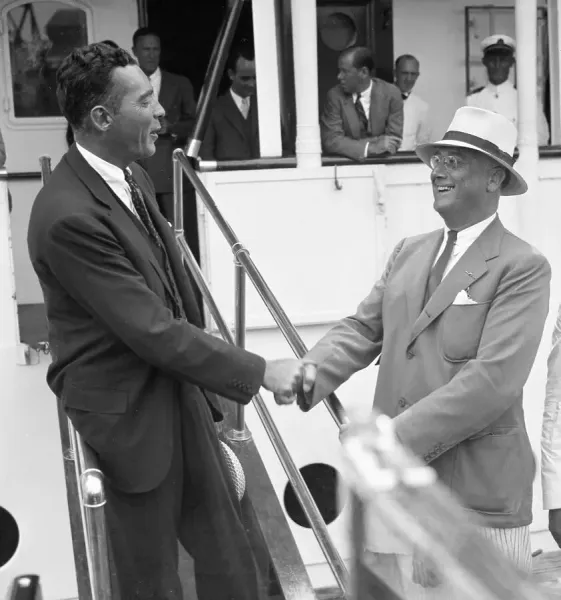
Vincent Astor and FDR
Credit: Getty Images
Franklin Delano Roosevelt may surprise some people as he was president long after the Titanic disaster. However, he and his family were closely linked to some of the families who were on the Titanic. Among the most connected families to FDR were the Astors. FDR’s older half-brother James Roosevelt Roosevelt was related to the Astors. He was one of 1st class passenger John Jacob Astor’s trustees in his will and was present at the funeral and burial. FDR knew JJ Astor’s son Vincent since they were boys. Despite the 8 years difference between them, FDR and Vincent became very close friends. Vincent hosted FDR on his yacht, the two went on vacations, and stayed in touch for many years. When FDR was president, Vincent was known to come and stay at the White House at times.
FDR was also a close friend of Jesse Isidor Straus, a son of Titanic victims Ida and Isidor Straus. When FDR was elected in 1933, he nominated Jesse who was his close friend as America’s Ambassador to France. Jesse (who was Jewish himself) reported to FDR about the conditions in France prior to the Nazi occupation. Jesse served until he had to resign due to health reasons in 1936 and died that year.
When the Titanic went down, letters were sent that give Franklin and Eleanor’s reactions to the disaster which are preserved in the FDR Library. To one Senator, FDR said:“I have not been able to get my thoughts away from the awful disaster, it seems too terrible to be true. The confidence in the 'unsinkableness’ of the great ship, the shortage of life boats, of long distance glasses no search lights, all these faults are doubtless common to all the great liners. Such warnings are I suppose necessary from time to time and for a time great care will be taken. Rosy is much upset over poor Jack Astor's death and spends most of his time at Mr. Ledyard's office. Mr. Millet, Mr. Widener, Major Archie Butt and Mary, others were well known but oh! the tragedies in the steerage as well. Even if we ought not to believe all we read, the facts remain some splendid things redeem it, the band playing till they sank, the stewards standing at the rail singing "Nearer My God to Thee" as the last life boat was moving out of sight!” Eleanor may have thought about one of her earliest memories of being a 3 year old little girl on the first White Star Line ship called SS Britannic when she collided with the RMS Celtic (I). She said, “The news of the Titanic disaster came in the morning but the reports were that all were saved until quite late at night. It is so appalling and awful and I think almost worse for the many women who were saved and who would probably far rather have gone down with their husbands and sons. I am so glad you are at least out of the track of icebergs.”
Ronald Reagan
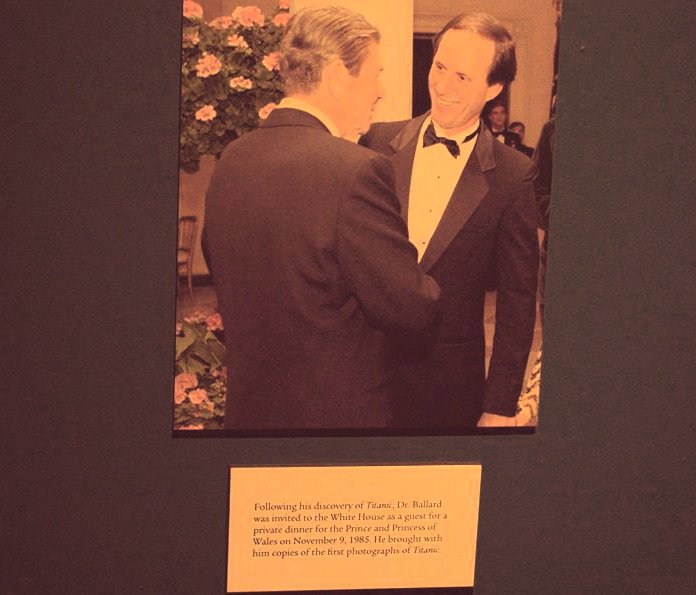
Dr. Ballard with President Ronald Reagan
Credit: Ronald Reagan Presidential Library
Ronald Reagan was president when the wreck of the Titanic was discovered on March 1, 1985 by a joint French-American expedition. The American expedition leader was Dr. Robert Ballard (Jean-Louis Michel was the French leader) who was later invited to a private dinner party with the Reagans and the Prince and Princess of Wales on November 9, 1985.
In 1986, President Reagan signed the International Maritime Memorial Act which established the wreck as an international memorial and established guidelines for exploring and recovering from the wreck site. Reagan then directed the State Department to use this act to create an agreement with other countries to also treat the wreckage the same way.
Credits:
Theodore Roosevelt Center
https://www.theodorerooseveltcenter.org/internships/rms-titanic-sinks/
FDR Presidential Library and Museumhttps://www.fdrlibrary.org/titanic
National Archives
Ronald Reagan Presidential Library
New York Tribune
Encyclopedia-Titanica
Straus Historical Society, 2011, The Autobiography of Isidor Straus
Behe, G. (2010), Archie Vol. 1, 2, 3. Lulu Publishing
Secretary of Theodore Roosevelt: , (1912, May 24). Letter from Secretary of Theodore Roosevelt to Morris Amdur. Theodore Roosevelt Papers. Library of Congress Manuscript Division.
Retrieved from https://www.theodorerooseveltcenter.org/Research/Digital-Library/Record?libID=o227378.
Patriotic Acts of Consumption: Lucile (Lady Duff Gordon) and the Vaudeville Fashion Show CrazeBy: Marlis SchweitzerTheatre Journal, Vol. 60, No. 4, Popular Culture and Theatre History (Dec., 2008), pp. 585-608The Johns Hopkins University Press